
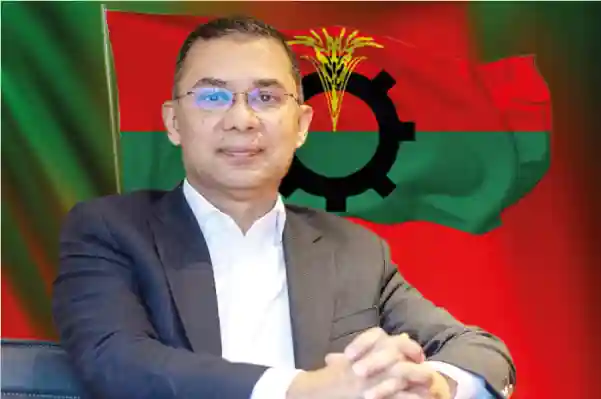
As Bangladesh prepares to head to the polls in February next year, all eyes are on a political figure whose life and career have long been defined by both dynastic legacy and controversy – Tarique Rahman.
Mr. Tarique, the Acting Chairman of the Bangladesh Nationalist Party (BNP), is the son of former Prime Minister Begum Khaleda Zia and former President Ziaur Rahman.
He has spent the better part of two decades navigating the treacherous waters of Bangladeshi politics from abroad. His leadership both contested and revered.
Once sentenced in high-profile criminal cases including the 2004 grenade attack on then-opposition leader Sheikh Hasina, he now finds himself legally cleared in key matters, paving the way for a return to the national stage.
The political landscape into which Mr. Tarique is set to re-emerge is marked by uncertainty and anticipation.
The BNP, the primary opposition to the ruling Awami League, boycotted the 2024 election citing rigging allegations, leaving a void that has only heightened public curiosity about who will lead the party’s charge in the next round of elections.
Within party ranks, there is little doubt: Mr. Tarique is the designated prime ministerial candidate, a symbolic and practical embodiment of the BNP’s strategy to merge dynastic continuity with a reformist platform aimed at youth, professionals and the broader electorate.
From his meetings with international diplomats in London to rallies and virtual addresses directed at voters across Bangladesh, Mr. Tarique has been positioning himself as both a stabilizing force and a visionary leader, promising to transform the party’s 31-point reform agenda into actionable policy.
With the nation poised at a critical juncture, his return carries implications far beyond the party itself: it signals a potential shift in Bangladesh’s political order, invites renewed debate on governance and raises the stakes for every political actor involved in the upcoming election.
As the BNP gears up for a campaign that seeks to blend legacy, legality and reform, Mr. Tarique’s journey from exile to the brink of premiership represents one of the most consequential political narratives in contemporary Bangladesh.
Anticipation in Exile
On a damp, grey morning in London, Mr. Tarique looked over the River Thames from his modest political base in the city.
Nearly two decades in exile had not dulled his political instincts. Instead, they had sharpened his resolve.
For years, he had led the BNP from abroad navigating court cases, political crises and party factionalism via phone calls, video conferences and carefully timed speeches.
Now, with the fall of Sheikh Hasina’s government and elections scheduled for February next year, Mr. Tarique is preparing for what could be the most important journey of his life: a return to Bangladesh to contest power directly.
His advisers have made it clear if the BNP wins the election, Mr. Tarique will be the next Prime Minister of Bangladesh.
A Political Heir
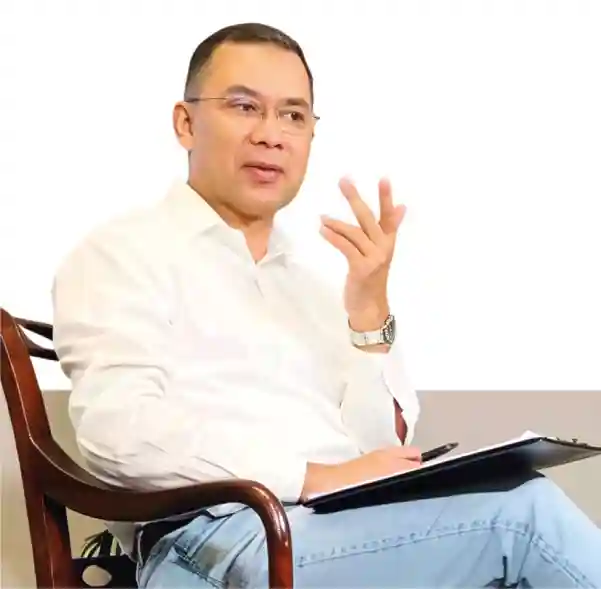
Mr. Tarique Rahman was born into Bangladesh’s most politically influential family after independence.
His father, General Ziaur Rahman, emerged as a national leader following the tumultuous early years of the country, becoming President and founding the BNP.
His mother, Khaleda Zia, served three terms as Prime Minister, establishing herself as one of the most prominent women leaders in South Asia.
For much of his early life, politics was the backdrop to Mr. Tarique’s existence rather than its centre.
That changed in the late 1990s and early 2000s, when Khaleda Zia’s government brought him into the political spotlight.
Seen as a youthful face for a party that needed generational renewal, Mr. Tarique quickly rose to become a central figure in BNP’s leadership.
The Rise and Fall
During the BNP’s tenure in government from 2001 to 2006, Mr. Tarique emerged as one of the most powerful and influential figures behind the scenes of the nation’s political landscape.
While officially holding the position of Senior Joint Secretary General of the BNP, his influence extended far beyond administrative titles.
Mr. Tarique was widely regarded as a central architect of party strategy, shaping policy decisions, guiding electoral campaigns and managing political alliances.
Colleagues and political observers alike described him as a kingmaker, whose advice and direction often determined the party’s national and regional strategies.
His ability to navigate both party politics and the broader corridors of power contributed to a rapid rise that few could match.
However, this very prominence also made him a lightning rod for controversy.
As the BNP government’s term ended and political tides shifted, Mr. Tarique became the focus of intense scrutiny.
In 2007, the Anti-Corruption Commission (ACC) filed a high-profile case against him and his wife, Zubaida Rahman, accusing the couple of accumulating wealth far beyond their known sources of income.
This marked the beginning of a series of legal challenges that would shadow him for years to come.
By 2008, Mr. Tarique was facing multiple charges ranging from alleged corruption to accusations of political violence cases that his supporters vehemently claimed were politically motivated and intended to undermine the BNP leadership.

The most serious and politically charged accusation came from the August 21, 2004 grenade attack, one of the deadliest attacks in Bangladesh’s current political history.
During this incident, grenades were hurled at an Awami League rally addressed by Sheikh Hasina, then the Leader of the Opposition.
Twenty-four people lost their lives and scores were injured in what was widely regarded as an attempt to destabilize the opposition and intimidate political dissent.
Tarique Rahman was later convicted in absentia and sentenced to life imprisonment in connection with the attack.
The BNP and its supporters immediately denounced the verdict, describing it as a targeted political vendetta aimed at neutralizing a key figure within the party hierarchy.
The combination of his meteoric rise in BNP leadership and the subsequent cascade of legal and political challenges transformed Mr. Tarique’s trajectory from a dominant force in national politics to a figure operating from exile.
Yet even amid these setbacks, his influence within the party remained significant, cementing his position as the heir apparent to BNP leadership and a potential future prime ministerial candidate.
This period of both ascendancy and adversity underscores the complex, often polarized nature of Bangladeshi politics, where legal battles, political rivalry and public perception intertwine to shape the destinies of the nation’s leaders.
Life in Exile: Navigating Politics from Abroad
Since 2008, Mr. Tarique has resided in London, initially citing medical treatment as the reason for his prolonged stay.
However, his so-called self-imposed exile soon took on a political dimension, becoming not merely a personal choice but a strategic necessity in light of the numerous legal cases and convictions pursued against him under the Sheikh Hasina government.
While his supporters within the BNP consistently portrayed him as a victim of politically motivated judicial persecution, his detractors argued that he was deliberately evading justice and the consequences of past actions.
This dichotomy has framed much of the discourse surrounding Mr. Tarique’s presence abroad, casting him simultaneously as a persecuted political leader and a controversial figure in the public eye.
Despite being thousands of miles away from the country’s political arena, Mr. Tarique managed to retain near-absolute control over BNP affairs, a testament to both his organizational skill and the party’s reliance on his leadership.
From London, he oversaw candidate selections for local and national elections, personally approved strategic party decisions and monitored grassroots mobilization.
He also harnessed modern technology to maintain visibility among supporters, regularly delivering video speeches and addresses to rallies across Bangladesh, ensuring his voice and policy directives reached party cadres and constituents alike.
Over the years, his influence within the BNP only grew stronger, particularly as the health of his mother, former Prime Minister Begum Khaleda Zia, deteriorated.
Mr. Tarique increasingly became the uncontested political heir, entrusted with steering the party through periods of internal turbulence and external political pressure.
His time in exile, while marked by legal battles and public scrutiny, was also a period of consolidation, allowing him to strengthen networks, coordinate with international allies and prepare the party for an eventual return to governance.
Analysts have noted that this period of remote leadership underscored his ability to navigate complex political landscapes, balancing party unity, legal constraints and international diplomacy, setting the stage for a high-stakes political comeback that could redefine Bangladesh’s political future.
The Turning Point: Fall of Hasina Govt.
The political landscape of Bangladesh underwent a dramatic transformation in mid-2024, a shift many analysts later described as one of the most significant upheavals in the country’s recent history.
Months of growing discontent had been simmering beneath the surface, fueled primarily by student activism, vocal youth movements and a middle class increasingly frustrated with economic stagnation, governance issues and perceptions of systemic corruption.
Street protests, initially localized, began to escalate, sweeping across Dhaka and spilling into smaller cities and towns, creating a wave of nationwide unrest that the ruling Awami League struggled to contain.
These protests were marked not just by demonstrations, but by organized calls for political accountability and reform, signaling a genuine and widespread demand for systemic change.
By August 2024, the culmination of this unrest, combined with mounting pressure from opposition parties, students and civic groups, precipitated the collapse of Sheikh Hasina’s government, ending a long-standing era of her leadership.
In the immediate aftermath, an interim administration was installed under the stewardship of Nobel laureate Muhammad Yunus, whose global stature and domestic credibility were seen as a stabilizing force capable of steering the nation through a politically sensitive transitional period.
This government’s formation marked not only a turning point in Bangladeshi politics, but also a pivotal moment in Mr. Tarique’s political journey.
The political realignment created an unprecedented opening for Mr. Tarique, who had been living in exile for over 15 years.
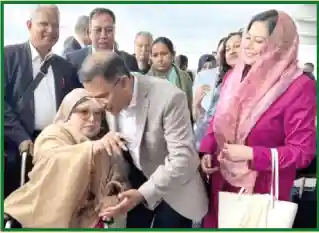
For years, legal convictions—most notably in the August 21, 2004 grenade attack case—had made his return impossible without risking immediate imprisonment.
However, in a landmark decision in December 2024, the High Court acquitted Mr. Tarique, former minister Lutfozzaman Babar and all other defendants involved in the case, declaring that the earlier convictions were legally flawed and insufficiently substantiated.
The ruling not only removed the most formidable legal obstacle in his path but also sent a powerful political signal: Mr. Tarique, long perceived as a leader in exile, could now re-engage directly with the electorate and assert his claim to political leadership on home soil.
With this legal barrier removed, discussions of Mr. Tarique’s return moved from speculation to serious planning within the BNP.
Party leaders and advisors began coordinating strategies for his re-entry into Bangladesh, anticipating that his presence would galvanize supporters, consolidate party unity and redefine the political contest ahead of the next elections.
The High Court’s decision, coupled with the interim government’s transitional role, created a rare political alignment in which Mr. Tarique’s comeback was not only possible but also potentially transformative for the nation’s political trajectory.
Observers noted that this moment represented a fusion of legal vindication, political opportunity and strategic timing, setting the stage for Mr. Tarique to reclaim his place at the forefront of Bangladeshi politics.
Diplomatic Engagements from London
Even while physically distant from Bangladesh, Mr. Tarique has remained an active and strategic player on both the national and international political stages.
His years in London were not spent in political dormancy; rather, they became a period of careful networking and diplomatic engagement, aimed at reinforcing his credibility and positioning him as a legitimate contender for leadership upon his return.
Mr. Tarique’s outreach was designed not only to maintain influence within the BNP but also to ensure that his eventual re-entry into Bangladesh’s political arena would be accompanied by a degree of international recognition and diplomatic support, according to observers.
A key element of this strategy was his meeting with the US Charge d’Affaires to Bangladesh, Ambassador Tracey Ann Jacobson, in London.
While the meeting was officially described as a “courtesy meeting,” sources close to the discussions indicated that it went far beyond mere pleasantries.
Reports suggest that the meeting included substantive discussions on bilateral relations, regional stability and broader geopolitical issues affecting South Asia, signaling Mr. Tarique’s desire to be seen as a responsible and globally aware political leader.
By engaging directly with international diplomats, he conveyed a message that, if given the mandate to govern, he would pursue policies consistent with both national interests and international norms.
In addition to his diplomatic engagement with the United States, Tarique also met with Muhammad Yunus, the Chief Adviser of Bangladesh’s interim government, during his visit to London in June 2025.
This meeting reportedly played a crucial behind-the-scenes role in solidifying the February 2026 election date, a development that was pivotal not only for the BNP but also for the broader opposition.
By fostering dialogue with key figures in the interim administration, Mr. Tarique was able to influence electoral planning, demonstrating a pragmatic and strategically nuanced approach that combined political foresight with actionable diplomacy.
These engagements reflect a broader pattern of calculated, high-level diplomacy designed to reinforce Mr. Tarique Rahman’s legitimacy, both at home and abroad.
Far from being a passive exile, he positioned himself as a leader capable of navigating complex political and international landscapes, laying the groundwork for his return to Bangladesh with a reinforced mandate, a clearer political roadmap, and strengthened connections with influential domestic and global stakeholders.
In doing so, Mr. Tarique demonstrated that his leadership ambitions were backed not only by party loyalty and domestic support but also by a carefully cultivated image of mature, internationally credible statesmanship.
BNP Positions Tarique as PM Candidate
In a clear signal of its leadership direction ahead of the upcoming national elections, the BNP has publicly positioned its acting chairman, Tarique Rahman, as the party’s choice for the country’s next prime minister.
Senior party figures have been increasingly forthright in confirming this stance, framing Mr. Tarique as both the political heir to the party’s founding leadership and the central figure in its vision for national governance.
Humayun Kabir, a former diplomat and Mr. Tarique’s adviser on foreign affairs, made a direct declaration during a recent media interaction, stating unequivocally that if the BNP returns to power, Mr. Tarique will assume the role of Prime Minister.
Mr. Kabir described Mr. Tarique as a leader equipped with the political acumen, international exposure and reformist outlook necessary to guide Bangladesh through its current socio-economic challenges.
His remarks were widely interpreted as a strategic attempt to consolidate the party’s support base around a single, unifying leadership figure and to reassure both domestic and international stakeholders of BNP’s leadership stability.
The message was further amplified by Mirza Fakhrul Islam Alamgir, BNP’s Secretary General, during the national conference of the Doctors’ Association of Bangladesh (DAB), a professional platform aligned with the party.
Addressing a large gathering of medical professionals and academics, Mr. Fakhrul referred to Mr. Tarique as “the country’s future prime minister” and urged professionals to unite behind the party’s proposed reforms in governance, healthcare and the economy.
Mr. Fakhrul’s comments underscored BNP’s strategy of engaging influential sections of civil society to broaden its appeal beyond traditional political circles.
He portrayed Mr. Tarique as a leader capable of
bridging the gap between political leadership and professional expertise, suggesting that his administration would prioritize institutional reform and merit-based governance.
BNP’s Election Campaign
Meanwhile, BNP is actively mobilizing its election campaign with a sharp sense of urgency and strategic vision.
Central to their efforts is the immediate demand for a firm election timeline, pressing the interim government and Election Commission to hold the national polls swiftly—ideally by December 2025, well before Ramadan and the 2026 financial year shift, citing logistical and democratic imperatives.
The party frames lingering reform debates and proposals for local elections or proportional representation as delaying tactics, reiterating that only timely national elections can resolve the persistence of political instability.
At the organizational level, BNP has entered full election mode: conducting constituency-level surveys, selecting candidates prioritizing those loyal during past hardship revamping grassroots committees and rallying youth wings (Chhatra Dal, Jubo Dal, Swechhasebak Dal) across the country to raise awareness of Mr. Tarique Rahman’s 31-point reform agenda.
Simultaneously, BNP is engaging politically with allies holding alliance talks, debating seat-sharing, and working to coordinate efforts within the emerging multi-party framework that stems from the July uprising and new political realities.
Through this comprehensive approach timely elections, disciplined campaigning, youth engagement and coalition-building the BNP is positioning itself as a ready and credible contender for the February 2026 polls.
Across busy intersections and quiet village roads alike, vibrant posters proclaiming “Let the youth’s first vote be for the sheaf of paddy Ô(Zviæ‡Y¨i cÖ_g †fvU, av‡bi kx‡li c‡¶ †nvK )Õ now feature prominently, each adorned with Mr. Tarique’s portrait alongside the BNP’s iconic symbol the sheaf of paddy.
The slogan makes it clear: the youth’s political debut is being courted through a unified visual campaign blending Mr. Tarique’s leadership.
A 31-Point Reform Agenda
BNP’s 31-point structural reform plan is acting at the centre to Mr. Tarique’s election campaign.
The proposal outlines short- medium- and long-term strategies for governance, economic development, healthcare and employment generation.
On healthcare, the plan promises systemic reforms, modernisation of facilities and improved access to services.
On the economy, Mr. Tarique has emphasised transforming Bangladesh’s demographic dividend into skilled manpower by expanding vocational training, promoting technology-based education and integrating sports into youth development.
Appeal to the Youth
In speeches delivered virtually to supporters in Bangladesh, Mr. Tarique has focused heavily on youth voters a crucial demographic in a country where over half the population is under 35.
He has promised to create jobs, encourage entrepreneurship and reform education to meet the needs of a technology-driven economy.
The revival of the “Notun Kuri” programme with the addition of a sports category, is part of his plan to identify and nurture talent from an early age.
Election Strategy and Timeline
BNP insiders suggest that Mr. Tarique’s return will likely take place between November and December 2025, strategically timed to energise the party base ahead of the February election.
The exact date may depend on when the election schedule is formally announced by the Election Commission.
Party officials say preparations are already under way for a mass reception at the airport and a series of rallies across key constituencies.
Security arrangements are being coordinated to address potential risks.
Tarique Intensifies Calls for Timely, Transparent Polls
From political exile in London, Mr. Tarique has sharpened his calls for a timely and transparent national election, framing the upcoming polls as a decisive moment for the country’s democratic future.
In a series of recent speeches, Rahman has argued that only a free, fair and impartial election can restore the political rights of citizens and prevent what he describes as “the spread of fascism” in Bangladesh.
On August 17 last, he urged unity among citizens and political stakeholders to ensure a credible vote, reiterating just days later that elections remain “the only path” to safeguarding democracy.
He has also sought to project an image of inclusive governance should the BNP secure a mandate.
Earlier on August 12 last, he pledged that his party would lead with “unity, courage and integrity,” promising to engage all citizens in governance and to prioritize youth participation as a driver of reform and progress.
At the same time, Mr. Tarique has taken a firm stance against electoral system reforms currently under discussion.
He has already denounced proposals to introduce a Proportional Representation model, warning that it could “open the door to separatism, extremism, and authoritarian rule,” and reaffirmed the BNP’s longstanding demand for direct voting and accountable government.
The acting chairman of BNP has also urged vigilance against what he suggested could be sabotage efforts, even from within factions of the interim government now overseeing the transition.
Timing remains central to Mr. Tarique’s political messaging. He has consistently pressed for elections to be held no later than December 2025, a deadline he emphasized in late May while pointing to the participation of nearly 35 million newly registered voters as vital for legitimacy. Recognizing mounting logistical challenges, however, he has signaled willingness to accept February 2026 as a compromise date, while firmly rejecting interim Chief Adviser Muhammad Yunus’s earlier proposal for April 2026.
Observers note that his evolving rhetoric reflects a careful balancing act: consolidating BNP’s base by rejecting systemic electoral changes, while signaling flexibility on timing to appear pragmatic to international stakeholders. His overarching message, however, has remained consistent Bangladesh’s future stability hinges on holding a credible, timely election that reflects the will of its people.
Challenges Ahead: Navigating Political Realities and Skepticism
As anticipation builds over Mr. Tarique’s eventual return to Bangladesh, the political landscape he is poised to re-enter presents both opportunities and formidable challenges.
Within the BNP, his supporters view him as the natural heir to the party’s legacy, the figure capable of leading the nation toward renewed governance and reform.
Yet, even within this strong base, questions linger about his ability to connect with a rapidly evolving electorate, particularly the youth who played a decisive role in the mass movements that led to the fall of the Hasina government in mid-2024.
This new generation of voters, politically awakened and increasingly vocal, has high expectations for transparency, accountability and meaningful change.
Many remain cautious of BNP’s historical governance record, skeptical that the party can reconcile past criticisms with the promises of reform and inclusivity that Mr. Tarique now champions.
Beyond public perception, Mr. Tarique faces internal party challenges that could significantly impact his leadership.
While the BNP has publicly emphasized a firm stance against extortion, corruption and abuse of power, maintaining discipline across its widespread network of local leaders and grassroots activists remains a persistent struggle.
Instances of rogue behavior at district and sub-district levels have occasionally undermined the party’s public image and senior leaders recognize that the success of Mr. Tarique’s campaign and ultimately, his potential government will depend on effectively curbing such internal inconsistencies.
Adding to the complexity are the broader political dynamics of Bangladesh, where electoral processes, coalition-building and civil society pressures intertwine to create an unpredictable environment.
Tarique must navigate regional sensitivities, bureaucratic inertia and a polarized media landscape, all while maintaining the confidence of both seasoned party members and an electorate eager for reform.
Analysts note that his ability to balance legacy politics with the demands of a modern and engaged citizenry will be critical to his success.
Failure to engage meaningfully with these challenges could risk alienating the very voters and stakeholders whose support will be essential in the February 2026 election.
In sum, while Mr. Tarique’s return is framed as a historic moment by the BNP and its supporters, it is far from assured that enthusiasm alone will translate into political success.
His leadership will be tested by the dual pressures of internal consolidation and external legitimacy, requiring both strategic, expertise and persuasive engagement to secure his place as a credible, forward-looking leader capable of delivering on the party’s ambitious reform agenda.
International Observers Watch Closely
Mr. Tarique’s anticipated return to Bangladesh and the forthcoming BNP-led electoral campaign have not gone unnoticed on the global stage.
International observers, diplomats and regional stakeholders are monitoring developments closely, acutely aware that the country’s next leadership transition could have significant implications for South Asia’s geopolitical balance.
Analysts note that Mr. Tarique’s political ascent, if actualized, will place him at the center of complex regional dynamics, requiring deft diplomacy and a nuanced understanding of both domestic priorities and international expectations.
Relations with India, the United States, China and other influential regional actors will be particularly consequential.
Bangladesh shares deep economic, cultura, and strategic ties with these nations and any future government will need to manage these relationships carefully to ensure stability, attract foreign investment and safeguard national interests.
For Mr. Tarique, the challenge will be to articulate a foreign policy vision that balances these external pressures while asserting Bangladesh’s sovereignty and protecting its territorial, economic and political prerogatives.
Observers have highlighted that Mr. Tarique’s previous interactions with international diplomats most notably his meetings in London with US Charge d’Affaires Tracey Ann Jacobson and other high-level envoys have already signaled an awareness of these complexities.
These engagements suggest that Mr. Tarique is keenly aware that modern leadership requires a sophisticated global outlook, one that combines pragmatic diplomacy with a firm commitment to national development.
Experts argue that his ability to navigate foreign policy challenges such as trade negotiations, energy cooperation and regional security concerns will be a key determinant of both domestic legitimacy and international credibility.
Moreover, the international community is also paying attention to the rule-of-law and governance aspects of Mr. Tarique’s potential premiership.
Observers stress that demonstrating a commitment to democratic norms, transparency and institutional reform will be critical in garnering global confidence.
For Bangladesh, a country strategically located at the crossroads of South and Southeast Asia, the stakes are particularly high: foreign investors, regional powers and multilateral institutions alike are looking for assurances that the next government will pursue policies that foster stability, economic growth, and constructive international engagement.
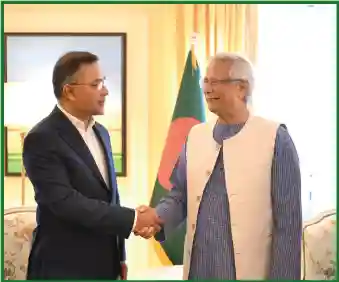
In short, Mr. Tarique’s return is not just a domestic political event it is a global watching moment.
His ability to reconcile the demands of domestic reform, youth empowerment and party unity with a balanced, forward-looking foreign policy will be scrutinized closely by governments and institutions worldwide.
Success on this front could elevate his premiership beyond national significance, positioning Bangladesh as a confident, sovereign actor capable of navigating the complexities of the 21st-century global order.
The Possible Premiership
If elected, Mr. Tarique would inherit a country in transition politically, economically and socially.
The expectations will be immense: restoring democratic institutions, managing a fragile economy, addressing corruption and delivering on promises of employment and development.
His success or failure will likely define Bangladesh’s political trajectory for the next decade.
On the Edge of History
As Bangladesh heads toward a pivotal election, Mr. Tarique stands at a junction not just in his personal journey, but in the nation’s democratic history.
For his supporters, his return represents a chance to restore political balance and end years of authoritarian governance.
For his critics, it is a reminder of the controversies and power struggles that have long defined Bangladeshi politics.
In the coming months, the streets of Dhaka will tell the story.
Whether they fill with crowds welcoming a future prime minister or sceptics questioning the past will determine whether Mr. Tarique can turn his long exile into a triumphant homecoming and whether he will indeed become the next leader of Bangladesh.
Atiqur Rahman Rumun